
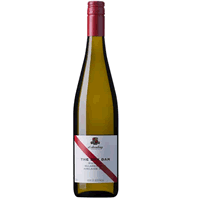
The Dry Dam Riesling is a very consistent and elegant Riesling. Greeny straw and slightly yellow colour. Fresh and mineral aromas of green pear,
lemon balm and fresh lime. The palate comes with a citrusy core of lemon curd and lime with a complementing outer layer
of tropical flavours like pineapple, green apple, pear and kiwifruit. Extraordinary acidity, lifted but not sharp and in perfect
harmony with the slightly sweet mouthfeel. Absolutely lovely now but can also age and evolve gracefully with some years in bottle
In 1992 our neighbours built a dam in which no water lay, as it was dry winter. The next year it rained but the dam was jinxed and didn’t hold water. We still hold the blame. Some people mix the name around, calling the wine ‘The Dam Dry Riesling’, which in some years is truer than others. A dry dam is bad news for our neighbouring farmers, but promises good results for our old, dry-grown, low yielding vines. The Last Dry Dam Riesling is a great wine from adverse times.
Small batches of grapes are gently crushed, chilled, and then basket pressed. The fermentation was long and cool, and was stopped before reaching total dryness
to ensure that residual sugar remains to balance the high mineral acidity.
The cool, wet 2022 winter filled the subsoil, while spring’s heavy rainfall impacted yields. Shaded basal buds and reduced fruitfulness
from the previous season resulted in small yields. Mild, dry summer caused late veraison. Despite a week of intense heat
in February, most vines survived. Riesling started three weeks late, and McLaren Vale Chardonnay and Sauvignon Blanc
ripened with low yields due to the heat wave. Autumn was mild, and red grape harvest followed McLaren Vale Chardonnay, with
variable, mostly low yields. Fiano, Marsanne, Roussanne, and Viognier ripened alongside the reds. Only 100 tonnes of red varieties
remained by Easter, with low yields in Adelaide Hills Chardonnay and Pinot. Dry white Chardonnay vineyards were used for
sparkling wine, promising a great year.
To see our full range of d’Arenberg product please click here
For more information on the d’Arenberg wines and winery click here.
An iconic Australian winery producing wines loved the whole world over.
The Dry Dam Riesling by d’Arenberg
£19.49 a bottle
3 in stock
d’Arenberg is an icon of the McLaren Vale, dating back to 1912. Chief winemaker Chester Osborn is the great-grandson of the founder, Joseph Rowe Osborn. Chester now oversees a stellar (and ever-expanding) range of strangely named and exquisitely crafted red and white wines.
The oldest of the d’Arenberg blocks were first planted in the 1880s with Shiraz, and still contribute to the wines today.”
The McLaren Vale is predominately a red wine region, producing some of the best red wines in South Australia. Vineyards were first planted in the mid 1800s. One of the early pioneers Thomas Hardy established a business that evolved to BRL Hardy, one of the largest wine companies in the country. The region also has a healthy number of boutique wineries that consistently make fine wines and experiment with different wine styles. The climate is warm to hot with dry summers, and benefits from cooling breezes from the St Vincent Gulf. The main wine styles: Red – Shiraz (rich, ripe & generous), Cabernet Sauvignon; White – Chardonnay, Sauvignon Blanc.
This website uses Cookies to improve your browsing experience. View Cookies Policy
I'm fine with this