
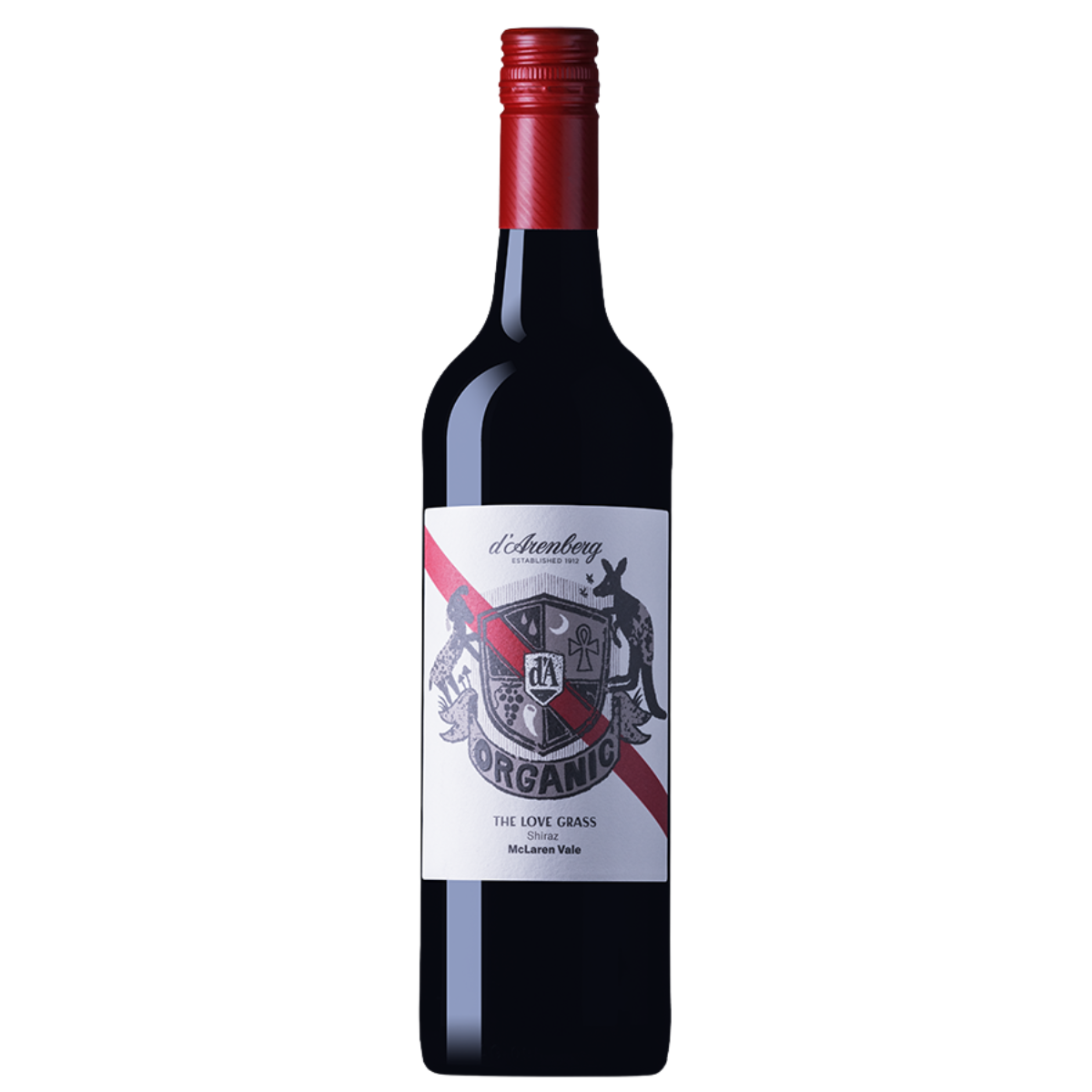
Love Grass Shiraz is named after the Lovegrass that is a weed which grows in the vineyards and its sticky flowers affectionately attach themselves to vineyard workers’ socks. This Shiraz will linger with you in the same way that the flowers do
This wine is very aromatic, revealing its full character after some time to breathe. Deep and intense red and dark fruits are
highly prominent such as boysenberry and mulberry that are complemented by ripe plum and bramble. Hints of anise and vanilla
add delightful complexity while extended cellaring will beautifully soften the firm grippy tannins that a quite prominent in this
youthful wine
Small batches of grapes are gently crushed and then transferred to open fermenters. Foot treading is undertaken two-thirds of
the way through fermentation, the wine is basket pressed and then aged in French oak for up to 18 months.
The preceding winter was beautifully wet flushing the soil of salts and filling the soil profile. Spring too was above average,
with rainfalls up until November which was almost completely dry. November was hotter than normal which upset the setting
of berries. Just as well as the bunch number was way up. Two inches of rain in early February was much appreciated
by the relatively large crops. Where crops where smaller, berry size grew. The heat produced a fast flowering, set, and speedy
berry development leading to an early veraison and the equal earliest start of vintage on record. A few days in a row
around 35°C in February rapidly ripened early lower cropping vineyards. From then on, the vintage was mild and dry. Average
temperatures for autumn were down. Some nice 30°C days late March and early April helped finish ripening of bigger crops and
late ripening varieties.
Love Grass Shiraz is a pleasure to match with all kinds of rich, meaty dishes.
To see our full range of d’Arenberg product please click here
For more information on the d’Arenberg wines and winery click here.
From entry level to iconic, all d’Arenberg wines have been basket pressed, reds and whites, with all red ferments foot trod during fermentation. Walking the vineyard rows and tasting grapes, Chester Osborn classifies and determines the ideal picking time for each individual vineyard. Small batches of grapes are gently crushed, then transferred to five tonne headed-down open fermenters, all batches remain separate until final blending. The red wines are foot trod two thirds of the way through fermentation, and then basket pressed. d’Arenberg is one of the only wineries in Australia to basket press both white wines as well as reds, making for a labour intensive process, but the quality of the results makes this worthwhile as the action is controlled and extremely gentle.
£21.00 a bottle
2 in stock
d’Arenberg is an icon of the McLaren Vale, dating back to 1912. Chief winemaker Chester Osborn is the great-grandson of the founder, Joseph Rowe Osborn. Chester now oversees a stellar (and ever-expanding) range of strangely named and exquisitely crafted red and white wines.
The oldest of the d’Arenberg blocks were first planted in the 1880s with Shiraz, and still contribute to the wines today.”
The McLaren Vale is predominately a red wine region, producing some of the best red wines in South Australia. Vineyards were first planted in the mid 1800s. One of the early pioneers Thomas Hardy established a business that evolved to BRL Hardy, one of the largest wine companies in the country. The region also has a healthy number of boutique wineries that consistently make fine wines and experiment with different wine styles. The climate is warm to hot with dry summers, and benefits from cooling breezes from the St Vincent Gulf. The main wine styles: Red – Shiraz (rich, ripe & generous), Cabernet Sauvignon; White – Chardonnay, Sauvignon Blanc.

d'Arenberg
Vegan
d'Arenberg
Vegan
d'Arenberg
Vegan
d'Arenberg
VeganThis website uses Cookies to improve your browsing experience. View Cookies Policy
I'm fine with this